Vehicle Theft in the UK: The Numbers
According to the Office for National Statistics (ONS), 129,159 vehicles were stolen in England and Wales between April 2023 and March 2024. That's almost identical to the previous year and represents the highest sustained level of vehicle theft since 2007.
On average:
- A vehicle is stolen every five to six minutes.
- UK insurers paid an estimated £1.24 billion in vehicle theft claims during 2024.
- Relay theft is believed to account for the majority of keyless vehicle thefts.
The rise in thefts closely mirrors the widespread introduction of passive keyless entry systems, which became common on new vehicles from around 2014 onwards. While engine immobilisers dramatically reduced theft throughout the 2000s, relay attacks have allowed criminals to bypass many of those security advances.
What Is a Relay Attack?
Keyless entry systems are designed for convenience. As long as your key fob is nearby, your vehicle automatically recognises it, unlocks the doors, and allows the engine to start.
Relay theft exploits this wireless communication.
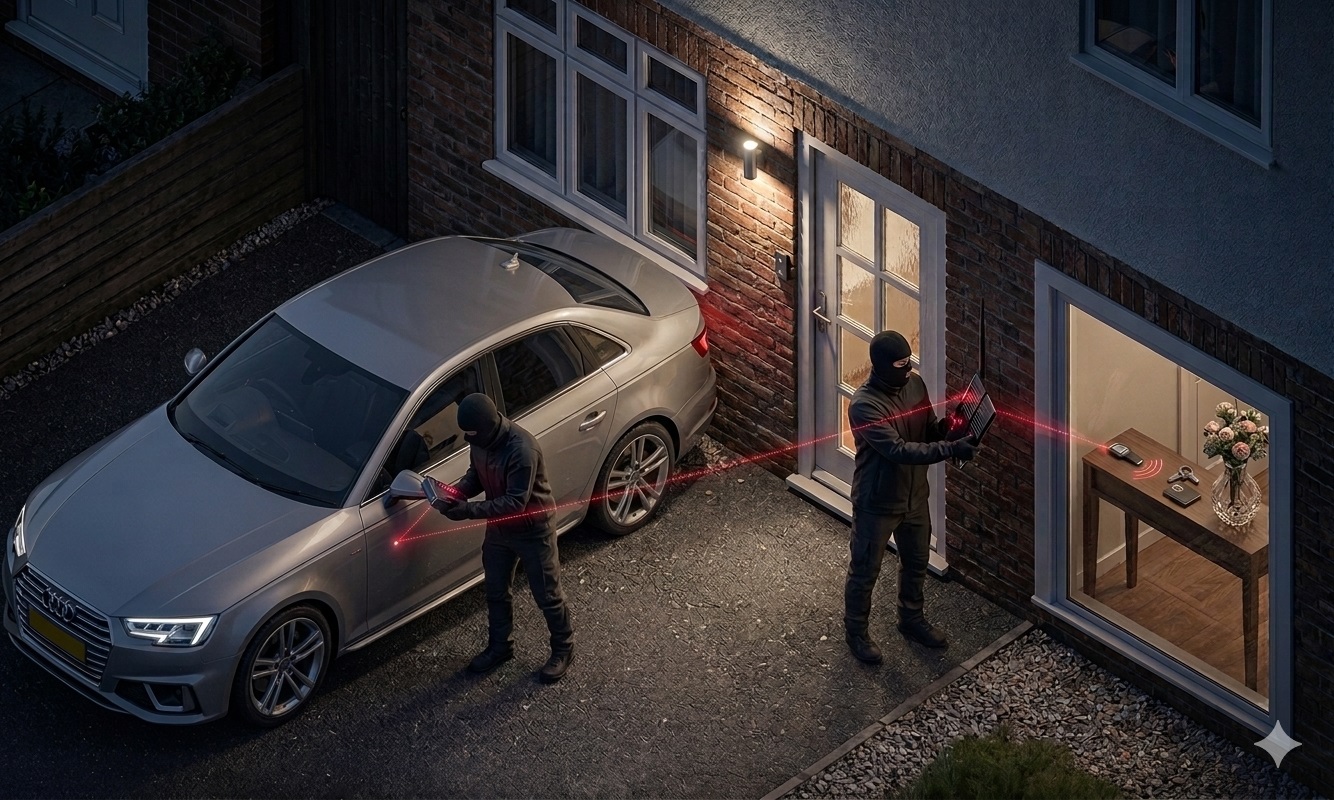
A typical relay attack involves two criminals using electronic devices:
- One thief stands close to your home with a signal amplifier, often outside the front door or near a ground-floor window where the key is stored.
- A second thief waits beside the vehicle with a relay receiver.
The amplifier captures the signal from your key fob and transmits it to the second device, making the vehicle believe the genuine key is right next to it.
The doors unlock, the engine starts, and the thieves simply drive away.
Because the car believes an authorised key is present, alarms usually remain silent and there is often no visible damage to the vehicle.
From arrival to driving away, the entire process can take less than 60 seconds.
How Vehicle Theft Has Changed in 2025
Relay attacks have become both cheaper and easier to carry out.
Only a few years ago, relay equipment cost well over £1,000 and required specialist knowledge to operate. Today, basic relay devices are widely available online at a fraction of the price, while instructional material circulates through encrypted messaging platforms and online forums.
Criminal methods have also evolved beyond simple relay attacks.
Many organised gangs now combine relay equipment with CAN bus attacks or onboard diagnostic (OBD) key programming tools, allowing them to create new working keys once access to the vehicle has been gained.
At the same time, criminals have shifted their attention towards newer hybrid and electric vehicles, which often command higher resale values and are in strong demand for export.
Which Vehicles Are Most at Risk?
While almost any keyless vehicle can be targeted, thieves typically focus on models that are valuable, common, and easy to sell or dismantle for parts.
Luxury SUVs, premium German brands, performance hatchbacks and popular hybrid crossovers continue to appear among the UK's most frequently stolen vehicles.
Owners of any vehicle equipped with passive keyless entry should take additional security precautions.
Five Ways to Protect Your Car
1. Store Your Keys in a Faraday Pouch
One of the simplest and most effective defences is a quality Faraday pouch.
These pouches block radio signals, preventing your key from communicating with the vehicle while it's stored inside.
Always test your pouch regularly by placing the key inside, sealing it completely and attempting to unlock the car. If the doors open, the pouch is no longer providing adequate protection and should be replaced.
2. Install a Ghost Immobiliser
An aftermarket immobiliser such as the Autowatch Ghost II provides one of the strongest defences against vehicle theft.
Rather than relying solely on the key, the system requires the driver to enter a unique PIN sequence using existing buttons inside the vehicle before the engine will start.
Even if thieves gain access using relay equipment or a cloned key, they cannot drive the vehicle without the correct code.
Because the system is hidden within the vehicle's electronics, it leaves no visible signs for thieves to locate or remove.
3. Use a Signal-Blocking Key Box
If you prefer not to carry a Faraday pouch every day, a signal-blocking key box provides similar protection at home.
Look for products specifically designed to block radio frequencies rather than decorative storage boxes, which offer little or no shielding.
4. Fit an OBD Port Lock
Many modern vehicle thefts involve programming a replacement key through the car's onboard diagnostic port.
An OBD port lock prevents easy access to this connection, making it significantly harder for criminals to create new keys after gaining entry.
5. Don't Overlook a Steering Wheel Lock
Although they may seem old-fashioned, steering wheel locks remain highly effective visual deterrents.
Most organised thieves are looking for the quickest target possible. A heavy-duty steering lock adds time, increases effort and often encourages criminals to move on to an easier vehicle.
What to Do If Your Car Is Stolen
If your vehicle is stolen, acting quickly gives you the best chance of recovery.
If the theft is happening or has only just occurred, call 999 immediately.
If you discover the theft later, report it to the police by calling 101 and obtain a crime reference number, which your insurer will require.
You should then:
- Contact your insurance provider as soon as possible.
- Share details of the vehicle with trusted local community groups.
- Check nearby CCTV, doorbell cameras and business security cameras that may have captured the theft.
- Report the vehicle on community vehicle recovery platforms such as VFindR, including its registration, colour, make, model and any distinguishing features.
The first few hours after a theft are often the most critical. Once a stolen vehicle has been hidden, dismantled or moved overseas, recovery becomes significantly more difficult.
Final Thoughts
As vehicle security technology has evolved, so have the methods used by criminals. Relay attacks have transformed car theft in the UK, making keyless vehicles particularly vulnerable if owners rely solely on the factory security system.
Fortunately, protecting your car doesn't require a single expensive solution. Combining simple measures such as a Faraday pouch with additional layers of security like an immobiliser, steering wheel lock and OBD protection can dramatically reduce the likelihood of your vehicle becoming a target.