Understanding Visible Light Transmission (VLT)
UK window tint regulations are based on Visible Light Transmission (VLT).
VLT measures how much visible light passes through a window.
For example:
- 75% VLT means 75% of light passes through the glass.
- 50% VLT means half the light is blocked.
- 5% VLT (often called limo tint) allows very little light through.
The lower the VLT percentage, the darker the window appears.
What Does UK Law Say?
Window tinting is regulated under the Road Vehicles (Construction and Use) Regulations 1986.
The legal limits apply only to the windows that affect the driver's forward visibility.
Front Windscreen
The windscreen must allow at least 75% of visible light to pass through.
Front Side Windows
The driver's and front passenger's windows must allow at least 70% of visible light to pass through.
Rear Side Windows
There are no legal tint restrictions on rear side windows for most passenger vehicles.
Rear Windscreen
There are no legal tint restrictions on the rear windscreen either.
This means you can legally fit very dark—or even limousine-style—tints to the rear of your vehicle, provided the front windows remain within the legal limits.
The Factory Tint Trap
One of the biggest mistakes drivers make is forgetting that most modern cars already have lightly tinted glass from the factory.
Factory glass often allows around 75–85% of visible light through.
When an aftermarket film is added, the combined VLT becomes lower than the original glass.
For example, a front window that already transmits 78% of light can easily fall below the legal 70% limit once an additional tint film is installed.
This is why reputable installers measure your existing glass before recommending a film.
Are Windscreen Sun Strips Legal?
Yes—but only within limits.
A sun strip fitted across the top of the windscreen is generally legal provided it doesn't extend into the driver's primary field of vision.
As a rule of thumb, it should remain above the area swept by the windscreen wipers.
If the strip obstructs your view of the road, it may be considered illegal.
Will Window Tint Fail an MOT?
Yes, if the front windows don't meet the legal light transmission requirements.
During an MOT, testers inspect the condition of the glass and may use a calibrated light meter if they believe the tint is too dark.
If either the front windscreen or front side windows fall below the legal limits, the vehicle will fail its MOT.
The tint film must then be removed—or replaced with a compliant film—before the vehicle can pass a retest.
Rear window tinting is not normally an MOT issue unless it affects visibility or the condition of the glass.
Police Enforcement
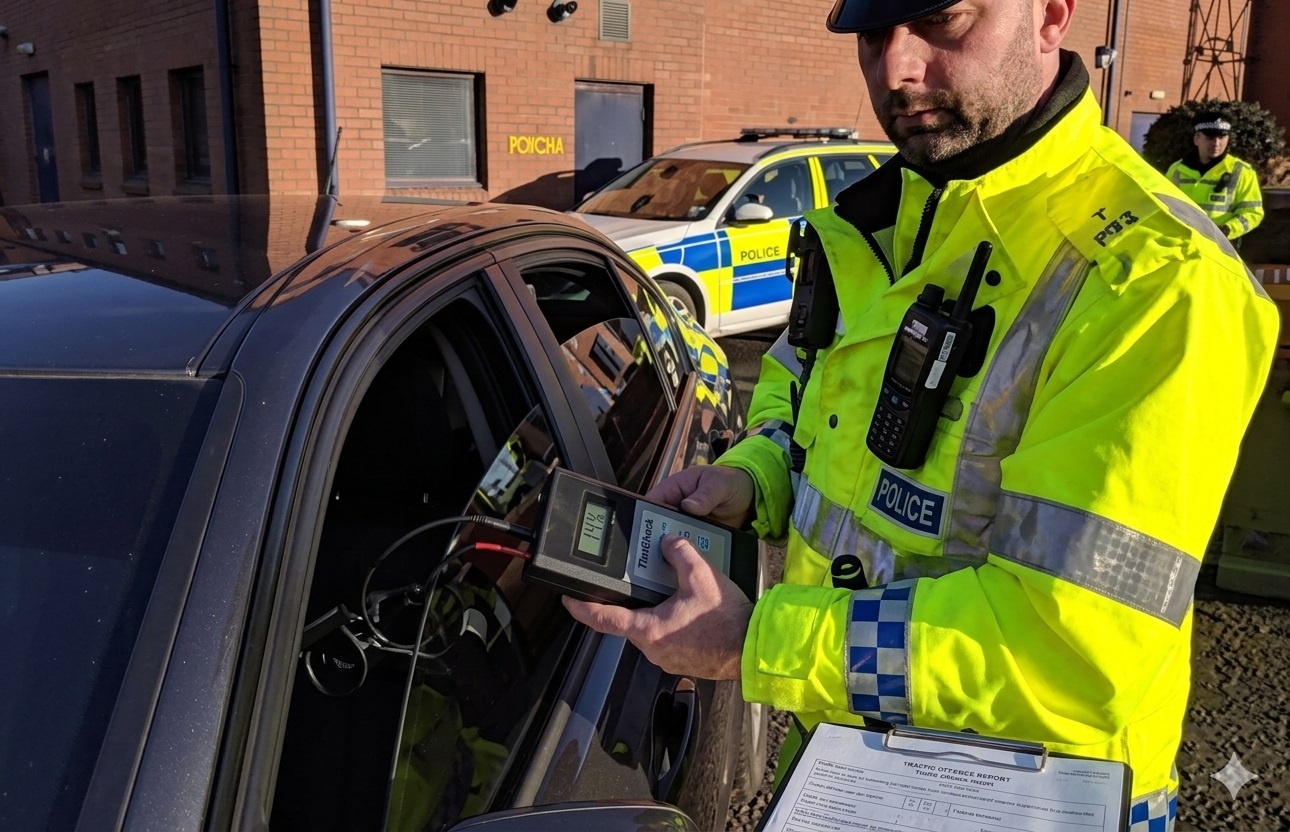
Police officers and the Driver and Vehicle Standards Agency (DVSA) have the authority to test window tint during roadside inspections.
Using a handheld light meter, they can quickly measure the amount of visible light passing through your windows.
If your front windows are found to be below the legal limit, you could face:
- A fixed penalty notice
- A prohibition notice preventing further use of the vehicle until the issue is rectified
- A requirement to remove the tint before continuing your journey
- More serious penalties if the reduced visibility is considered dangerous
How to Stay Within the Law
If you're planning to tint your windows, a few simple steps can help you avoid unnecessary problems.
- Have your existing glass tested before choosing a tint film.
- Use a reputable installer who understands UK VLT regulations.
- Avoid fitting aftermarket film to the front windows unless you're certain the finished result will remain legal.
- Keep documentation showing the specification of the tint film used.
- If in doubt, leave the front windows untouched and tint only the rear glass.
Is Rear Window Tint Worth It?
For many drivers, the answer is yes.
Rear window tinting offers several benefits without creating legal concerns, including:
- Improved privacy
- Reduced glare for rear passengers
- Better protection against UV rays
- Lower cabin temperatures during summer
- A cleaner, more premium appearance
Because there are no legal VLT limits for rear side windows or the rear windscreen on most passenger cars, they're the safest place to achieve a darker look.
Final Thoughts
Window tinting is one of the simplest ways to change the appearance of your car, but it's important to understand where the legal limits apply.
The rear of the vehicle offers almost complete freedom, allowing you to choose darker films for improved privacy and style. The front, however, is tightly regulated to ensure drivers maintain adequate visibility in all conditions.
If you're unsure, let a professional installer measure your existing glass before any film is applied. Taking that extra step can save you from an MOT failure, roadside penalties and the cost of removing illegal tint later.
For most UK drivers, the safest approach is simple: enjoy darker rear windows, keep the front within the legal limits, and you'll have the best of both worlds.