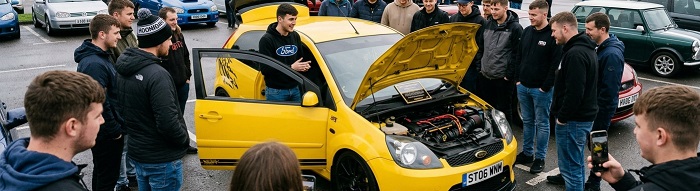
Step 1: Choosing the Right Venue
The venue is the foundation of your entire event.
A good location makes everything easier: cars arrive smoothly, visitors stay longer and landowners are more likely to support future events.
A poor venue can create problems immediately, from overcrowding and complaints to security issues and cancelled events.
What Makes a Good Car Meet Location?
Look for a venue with:
- Enough space for the expected number of vehicles
- Easy access and clear entry/exit routes
- A good-quality surface suitable for lowered cars
- Good lighting for evening events
- Nearby facilities such as toilets or food options
- Minimal disturbance to local residents
- A supportive landowner or management team
Popular choices often include:
- Retail parks
- Business parks
- Private event spaces
- Motorsport venues
- Large hospitality venues
Always think about how the location will work when 50, 100 or even 300 cars arrive—not just how it looks when it's empty.
Step 2: Get Permission From the Landowner
This is the step many first-time organisers overlook.
If you are using private land, you must get permission from the landowner or the company responsible for managing the site.
Many retail parks and business parks are controlled by facilities management companies rather than individual businesses, so finding the correct contact person may take some research.
When contacting a venue, explain:
- Who you are
- What type of event you want to organise
- Expected attendance numbers
- Date and times
- How you will manage safety and behaviour
- That the event will be controlled and respectful
A well-prepared request is far more likely to receive approval.
Never assume an empty car park is available to use. Hosting a meet without permission can result in:
- Security shutting down the event
- Police being called
- Complaints from nearby businesses or residents
- Loss of trust with future venues
- Potential legal action for trespassing
A responsible car community depends on organisers respecting locations and relationships.
Step 3: Consider Event Insurance
Insurance requirements depend on the type of event you are running.
If you are:
- Charging entry fees
- Selling merchandise
- Hosting traders
- Taking formal responsibility as an event organiser
then public liability insurance is strongly recommended and may be required.
This type of cover protects against claims involving:
- Personal injury
- Property damage
- Accidents linked to the event
Even for free informal meets, insurance is worth considering. One serious incident could create significant personal financial risk for the organiser.
Possible options include:
- Specialist event insurance providers
- Motorsport and enthusiast insurance companies
- Cover arranged through event management companies
Step 4: Plan Safety and Use Marshals
The biggest reason car meets lose venue support is not the number of cars—it is poor behaviour.
Problems such as:
- Excessive revving
- Burnouts
- Dangerous driving
- Blocking roads
- Leaving litter
- Aggressive behaviour
can quickly turn a successful event into a problem for everyone involved.
For a meet of around 100 cars, consider having several marshals available to:
- Guide vehicles into parking areas
- Manage traffic flow
- Deal with issues quickly
- Speak to attendees who ignore the rules
Create a simple communication system, such as a WhatsApp group, so marshals can coordinate during the event.
Create a Clear Code of Conduct
Set expectations before people arrive.
A simple event policy might include:
- No dangerous driving
- No burnouts or drifting
- No unnecessary revving
- Respect local residents and businesses
- Keep music at a reasonable level
- Take all rubbish home
- Follow marshal instructions
Publish this clearly on your event page and social media posts.
A well-managed community will often police itself when expectations are clear.
Step 5: Promoting Your Car Meet
Good promotion attracts the right crowd.
The most effective platforms for UK car meets in 2025 include:
Still one of the strongest tools for local automotive communities.
Use:
- Local car groups
- Regional enthusiast pages
- Dedicated event pages
Ideal for building excitement through:
- Event graphics
- Previous meet photos
- Vehicle features
- Countdown posts
TikTok
Short videos can rapidly increase awareness, especially for visual events.
WhatsApp and Discord Communities
Useful for established groups and regular attendees.
When promoting your meet, always include:
- Date
- Time
- Location
- Entry requirements
- Expected behaviour
- Contact information
Avoid advertising vague "massive meets" without organisation—they often attract the wrong attention.
Step 6: Managing the Event Day
Preparation makes the day run smoothly.
Before opening:
- Arrive early
- Place signs where needed
- Brief marshals
- Check parking areas
- Confirm emergency access routes remain clear
During the meet:
- Welcome attendees
- Monitor behaviour
- Keep traffic moving
- Remove issues quickly
- Maintain communication with the venue
A professional approach reassures both attendees and landowners.
Step 7: Turning a Meet Into a Community
Anyone can organise a one-off gathering.
Building a successful regular event requires consistency.
To keep people returning:
- Hold meets on a predictable schedule
- Build relationships with venues
- Share photos and videos afterwards
- Encourage respectful behaviour
- Listen to attendee feedback
- Work with local businesses where possible
Over time, a small local meet can become a recognised community event with opportunities for:
- Sponsorship
- Food vendors
- Automotive businesses
- Charity fundraising
- Larger organised events
Final Thoughts
The best car meets are built on three things: good organisation, respect and community.
A successful event isn't just about filling a car park with vehicles—it is about creating a space where enthusiasts, businesses, landowners and local communities all feel comfortable.