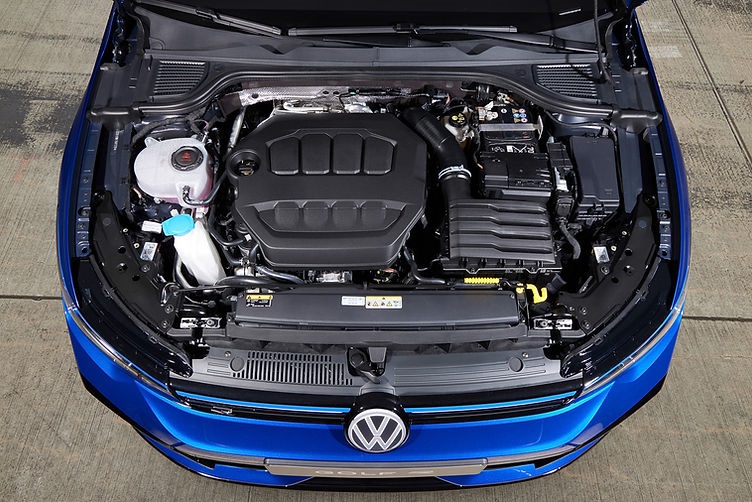
Stage 1 vs Stage 2: What's the Difference?
From the factory, the Golf R produces between 300 and 333bhp, depending on the model. The latest Mk8 Golf R delivers around 320bhp, while earlier Mk7 and Mk7.5 models produce slightly less.
Stage 1
A Stage 1 tune involves an ECU remap with no additional hardware required.
Typical results include:
- 360–380bhp
- Noticeably stronger torque
- Improved acceleration
- Retains most factory components
For many owners, Stage 1 offers the best value-for-money performance upgrade available.
Stage 2
Stage 2 takes things further by combining an ECU calibration with supporting performance parts.
A typical Stage 2 package includes:
- Performance intercooler
- High-flow intake or performance panel filter
- Sports catalytic converter or high-flow downpipe
- ECU remap designed for the upgraded hardware
With the correct setup, most Stage 2 Golf Rs produce between 400 and 430bhp, offering performance that rivals much more expensive sports cars.
What Does a Stage 2 Golf R Cost?
While prices vary between brands and tuners, a quality Stage 2 build is a significant investment.
Typical costs include:
| UpgradeTypical Cost | |
| ECU Stage 2 remap | £500–£900 |
| Performance intercooler | £700–£1,200 |
| Intake system | £250–£600 |
| Sports cat or high-flow downpipe | £600–£1,400 |
| Professional fitting | £500–£1,000 |
Once labour is included, it's not unusual for a complete Stage 2 conversion to cost £3,000–£5,000.
Choosing reputable parts and experienced installers is essential, as poor-quality components can affect both reliability and drivability.
The Insurance Costs Most Owners Forget
The biggest surprise for many enthusiasts isn't the cost of the hardware—it's the insurance.
Unlike a Stage 1 remap, which many specialist insurers are happy to cover, Stage 2 modifications involve physical engine and exhaust upgrades alongside a significant increase in power.
From an insurer's perspective, this represents a much higher level of risk.
Premium increases depend on factors including:
- Driver age
- Postcode
- Driving history
- No Claims Bonus
- Annual mileage
- Storage and security
- The full list of declared modifications
Some drivers may see only a modest increase, while others could face substantially higher premiums or find that mainstream insurers simply refuse to provide cover.
For this reason, obtaining insurance quotes before purchasing parts is always worthwhile.
Which Insurers Cover Modified Golf Rs?
Most Stage 2 owners insure their vehicles through specialist modified-car insurers rather than mainstream providers.
Companies experienced with performance and modified vehicles generally offer more competitive pricing and better understand upgrades such as ECU remaps, intercoolers and exhaust systems.
It's always worth comparing several specialist brokers, as premiums for an identical specification can vary by hundreds of pounds each year.
Why Declaring Your Modifications Matters
Every performance modification should be declared to your insurer.
This includes:
- ECU remaps
- Intercoolers
- Intake systems
- Exhaust upgrades
- Sports catalytic converters
- Suspension modifications
- Wheels and tyres
Failing to disclose modifications could allow an insurer to refuse a claim or even cancel your policy if the vehicle is involved in an accident.
If you're unsure whether a particular upgrade counts as a modification, declare it anyway. Your insurer will advise whether it affects your policy.
Is Stage 2 Worth It?
For many drivers, Stage 1 remains the sweet spot.
It delivers a substantial increase in power, requires fewer supporting modifications and generally keeps insurance costs under better control.
Stage 2, however, is ideal for enthusiasts who want the maximum performance from the EA888 engine without moving to a larger turbocharger.
It's particularly worthwhile if you:
- Attend track days regularly
- Plan to continue modifying the car
- Want performance comparable to much more expensive sports cars
- Already intend to upgrade cooling and exhaust components
If your Golf R is primarily used as a daily driver, Stage 1 is often the more sensible and cost-effective choice.
Final Thoughts
A properly built Stage 2 Golf R is an exceptionally capable performance car, offering over 400bhp with everyday practicality. But achieving those figures involves much more than simply installing a remap.
Once you factor in quality hardware, professional installation and specialist insurance, the total investment can easily reach several thousand pounds.
Before committing to the upgrade, budget for the complete package—not just the tune itself. Choosing reputable parts, using experienced installers and declaring every modification to your insurer will help ensure your Golf R remains fast, reliable and fully protected.
For most owners, that's money well spent.