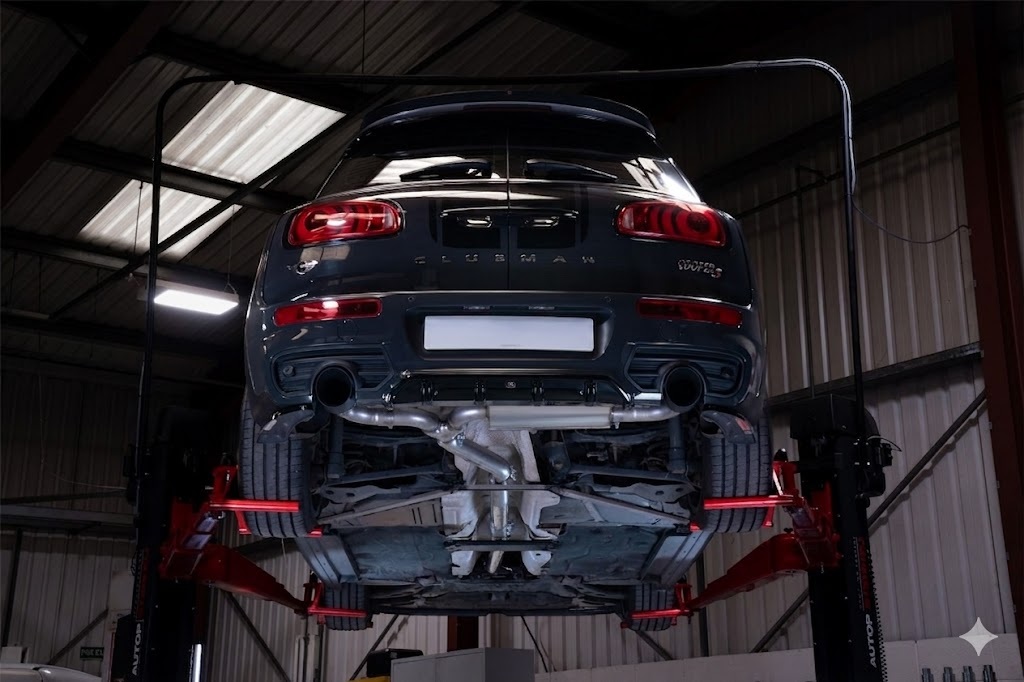
Understanding Your Exhaust System
Before choosing an upgrade, it's worth understanding the components that make up a typical exhaust system. Starting from the engine, most vehicles include:
- Exhaust manifold or turbo outlet
- Downpipe
- Catalytic converter (catalyst)
- Centre resonator
- Rear silencer (muffler)
- Tailpipes
You'll often hear the terms cat-back and turbo-back when shopping for exhausts.
A cat-back exhaust replaces everything behind the catalytic converter. This is the most common upgrade for road cars because it improves sound and appearance while leaving the emissions system untouched.
A turbo-back or full exhaust system replaces everything from the turbocharger or exhaust manifold, including the downpipe and catalytic converter. While these systems can deliver greater performance gains, they also carry the greatest legal implications for road use.
Types of Exhaust Upgrades
There are several types of aftermarket exhaust systems available, each offering different benefits.
Axle-Back Exhaust
An axle-back system replaces only the rear section of the exhaust. It's usually the most affordable option and is ideal for drivers looking for a subtle improvement in exhaust tone without replacing the entire system.
Cat-Back Exhaust
A cat-back system is widely regarded as the best all-round upgrade for daily-driven vehicles. It offers improved sound, better exhaust flow and a sportier appearance while remaining road legal when fitted correctly.
Turbo-Back or Full System
A full exhaust system replaces virtually every component from the engine backwards. These systems are generally intended for heavily modified or track-focused vehicles and often require supporting engine modifications and ECU tuning.
UK Exhaust Laws in 2025
Exhaust modifications in the UK are governed by the Road Vehicles (Construction and Use) Regulations 1986, alongside vehicle type approval and MOT regulations.
The law focuses on two key areas: emissions and noise.
Catalytic Converters
If your vehicle was originally fitted with a catalytic converter, it must remain in place for road use.
Petrol vehicles first registered after 1 August 1992 are required to retain their catalytic converter. Removing or bypassing it is illegal and will almost certainly result in an MOT failure.
The MOT inspection also checks that emissions control equipment is present and has not been obviously modified.
Diesel Particulate Filters (DPFs)
The same rules apply to diesel particulate filters.
Removing a DPF from a road-going diesel vehicle is illegal and has been an MOT failure since 2014. Drivers can also face financial penalties if a removed DPF is discovered.
Euro 7 Regulations
Euro 7 emissions standards came into force for newly approved vehicles during 2025.
Although these regulations mainly affect manufacturers rather than existing vehicles, they reflect an ongoing tightening of emissions legislation and enforcement across the UK.
Exhaust Noise Regulations
Many drivers assume there's a simple legal decibel limit, but the reality is more complicated.
Standard passenger cars are typically approved to produce around 74 dB under controlled testing conditions. However, roadside assessments are based on whether a vehicle has been modified to produce excessive noise compared to its original specification.
In other words, fitting an exhaust that makes your car significantly louder than when it left the factory could result in enforcement action.
Increased Roadside Enforcement
During 2025, several UK police forces have expanded the use of roadside noise monitoring.
Acoustic cameras and handheld sound meters are now being used in areas where complaints about modified vehicles are common.
If your vehicle exceeds acceptable noise levels, you may receive:
- A Vehicle Defect Rectification Notice
- A fixed penalty fine
- An order to restore the vehicle to a legal condition
- Prosecution in more serious cases
For this reason, extremely loud exhaust setups, particularly those with resonator deletes or decats, are becoming increasingly risky for everyday road use.
MOT Considerations
During an MOT, your exhaust system will be inspected for:
- Emissions compliance
- Excessive noise
- Security and condition
An exhaust that is leaking, insecure, excessively noisy or missing required emissions equipment is likely to fail.
Which Exhaust Upgrade Is Best?
For most UK drivers, a high-quality stainless steel cat-back exhaust offers the best balance between performance, sound and legality.
A premium system can provide:
- A deeper, sportier exhaust note
- Improved exhaust flow
- Better corrosion resistance
- Attractive tailpipe finishes
- Long service life
- Minimal risk of MOT issues
Choosing a Quality Brand
Not all aftermarket exhausts are created equal.
Budget systems often sacrifice material quality, fitment and sound engineering. They may become significantly louder over time as internal baffles deteriorate, increasing the risk of failing noise inspections.
Well-established manufacturers generally offer better build quality, more consistent sound levels and superior durability.
Popular choices among UK enthusiasts include:
- Milltek Sport
- Scorpion Exhausts
- Cobra Sport
- Remus
- Akrapovič
Although these systems cost more initially, they often prove better value over the long term.
Don't Forget Your Insurance
An aftermarket exhaust is considered a vehicle modification and should always be declared to your insurer.
While a quality cat-back system usually has only a modest impact on insurance premiums, failing to declare any modification could invalidate your policy.
Always check with your insurer before fitting aftermarket parts.
Final Thoughts
A well-designed aftermarket exhaust can significantly enhance your driving experience without creating unnecessary legal headaches.
For most enthusiasts, a resonated stainless steel cat-back system from a reputable manufacturer delivers the ideal combination of improved sound, better looks and long-term reliability while remaining suitable for UK roads.
If your goal is a louder, more aggressive setup, remember that removing emissions equipment or dramatically increasing exhaust noise carries far greater legal and financial risks than ever before.