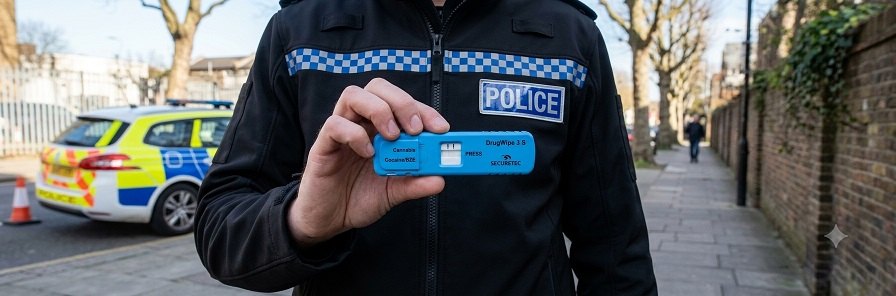
Drug-driving offences have overtaken drink-driving offences on UK roads for the first time, according to new figures that have raised concerns among road safety organisations.
Data obtained through a Freedom of Information request by road safety charity IAM RoadSmart revealed that more than 30,700 drivers received drug-driving endorsements in 2025, representing a significant increase compared with previous years.
By comparison, drink-driving endorsements fell to just under 30,000 during the same period, continuing a downward trend.
The figures highlight a changing risk on Britain’s roads, with drug-impaired driving becoming an increasingly serious issue for police forces and motorists.
Young drivers remain a key concern
The statistics also show that younger motorists are disproportionately represented in drug-driving offences.
Drivers aged between 17 and 24 accounted for around 18% of drug-driving endorsements in 2025, despite making up only a small proportion of all licence holders.
Road safety experts have warned that greater education is needed to challenge misconceptions around drug use and driving, particularly the belief that certain substances have little impact on driving ability.
High-speed drug-driving incident highlights the dangers
The dangers of drug-driving were recently highlighted after a driver was involved in a serious incident on the A55 in North Wales.
The driver reached speeds of 167mph while being pursued by police, before later appearing before Mold Crown Court.
The driver admitted offences including drug-driving, dangerous driving and driving without insurance. They received a suspended prison sentence, a driving ban and further penalties.
The case demonstrates how drug-related impairment combined with dangerous driving behaviour can put the lives of other road users at serious risk.
Drug-driving can have devastating consequences
Latest Department for Transport figures show that 74 people were killed in road collisions during 2024 where driver impairment caused by drugs was recorded as a contributing factor.
Under UK law, motorists can face:
- A minimum one-year driving ban
- An unlimited fine
- Up to six months in prison
- A criminal record
Drug-driving laws apply whether substances are illegal or whether a driver has taken certain prescription or controlled medication that affects their ability to drive safely.
Calls for tougher action
IAM RoadSmart has called for additional powers to help police remove dangerous drivers from the road more quickly.
The organisation believes officers should have the ability to immediately suspend a driver’s licence following a failed roadside drug test, rather than waiting for further laboratory analysis.
The charity has also called for improved rehabilitation programmes and more education to help prevent repeat offences.
A Department for Transport spokesperson described the figures as “deeply concerning” and confirmed that the Government is exploring new approaches to tackling drug-driving, including alternative testing methods such as saliva and sweat-based evidence collection.
Staying safe on the road
Drug-driving is not just a legal issue — it is a safety issue that affects every road user.
Drivers should always consider whether they are fit to drive before getting behind the wheel. Even small changes in reaction times, concentration or decision-making can have life-changing consequences.
At VFindR, we believe safer roads start with awareness, responsibility and communities looking out for one another.