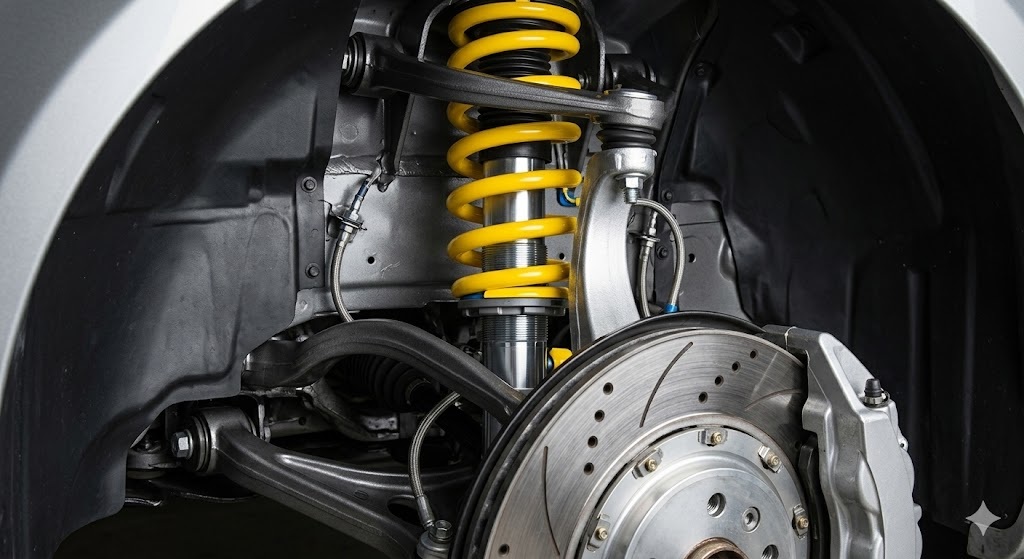
What Are Coilovers?
A coilover combines the spring and shock absorber into a single adjustable suspension unit.
Unlike lowering springs, which simply reduce ride height while retaining the factory dampers, coilovers allow much greater control over your car's suspension.
Depending on the model, adjustments can include:
- Ride height
- Spring preload
- Damping stiffness (rebound and compression)
- Corner weighting on higher-end systems
This flexibility allows drivers to tailor their suspension for daily driving, spirited road use or dedicated track days without replacing components.
However, adjustability also means incorrect setup can make a car ride significantly worse than standard.
Are Coilovers Legal in the UK?
Yes.
Coilovers are completely legal for road use in the UK, provided the vehicle remains safe, roadworthy and meets MOT requirements.
There is no requirement to notify the DVLA simply because you've replaced your suspension, and aftermarket coilovers do not require separate type approval for standard road cars.
The important point is that the vehicle must remain safe to drive and comply with UK construction and use regulations.
Choosing quality components and having them professionally installed helps ensure your car remains fully road legal.
Will Coilovers Pass an MOT?
Installing coilovers doesn't automatically affect your MOT.
However, poorly fitted or excessively lowered suspension can lead to failures.
Common issues include:
- Suspension components fouling bodywork or tyres
- Insufficient ground clearance
- Damaged or leaking dampers
- Loose or worn suspension components
- Excessive tyre wear caused by incorrect alignment
A professionally installed coilover kit that has been correctly aligned should have no difficulty passing an MOT.
The Reality of UK Roads
This is where many buying guides fall short.
UK roads are among the roughest in Europe, with potholes, uneven surfaces and damaged road edges becoming increasingly common. Even relatively minor suspension changes can have a noticeable impact on comfort.
For most daily drivers, lowering a vehicle by around 20–30mm provides the best balance between improved appearance, sharper handling and everyday usability.
Dropping a car significantly lower than this may look impressive, but it can introduce a range of practical problems, including:
- Frequent scraping on speed bumps
- Reduced suspension travel
- Poor ride quality
- Increased wear on suspension components
- Greater risk of wheel and tyre damage
When it comes to UK roads, lower isn't always better.
Choosing the Right Coilovers
Coilover kits are available at almost every price point.
Budget kits can cost under £300, while premium motorsport systems often exceed £3,000.
For most enthusiasts who use their car every day, the sweet spot is typically between £600 and £1,200 for a quality kit before installation.
Spending more generally brings improvements in:
- Ride quality
- Corrosion resistance
- Adjustment range
- Build quality
- Long-term reliability
A well-engineered suspension kit will usually provide a more comfortable ride than a cheaper alternative, despite offering better handling.
Popular Coilover Brands
Several manufacturers have built strong reputations among UK enthusiasts for producing suspension systems that balance comfort with performance.
Some of the most respected names include:
- BC Racing
- Bilstein
- KW Suspension
- ST Suspension
- H&R
- Eibach
- Öhlins (premium)
Each brand offers different levels of adjustability, making it worth considering how you'll actually use the car before choosing a kit.
Professional Installation Matters
Although experienced enthusiasts may install coilovers themselves, professional fitting is strongly recommended.
A typical installation takes between three and five hours depending on the vehicle.
After fitting, it's good practice to follow this process:
- Set an initial ride height.
- Drive the car for several days to allow the suspension to settle.
- Book a professional four-wheel alignment.
- Fine-tune the damping settings if your kit allows adjustment.
- Recheck locking collars and mounting hardware after the first few hundred miles.
Skipping the alignment is one of the most common mistakes and can lead to poor handling and rapid tyre wear.
Do Coilovers Affect Insurance?
Yes.
Coilovers are considered a suspension modification and should always be declared to your insurer.
Many insurers treat suspension upgrades as relatively minor modifications, particularly if the vehicle remains suitable for normal road use. However, premiums can still vary depending on factors such as your age, postcode, vehicle value and the extent of other modifications.
If your car has multiple performance upgrades, specialist modified-car insurers often provide more competitive cover than mainstream providers.
Failing to declare suspension modifications could invalidate your insurance policy or affect any future claim.
Are Coilovers Worth It?
For enthusiasts who value both appearance and handling, coilovers are one of the most rewarding modifications available.
The ability to adjust ride height and damping allows you to tailor your car to your driving style while achieving a stance that's impossible with standard suspension.
The key is choosing a quality suspension kit and setting it up realistically for UK roads.
For most drivers, a moderate drop combined with softer damping delivers a car that's more enjoyable to drive every day—not just one that looks good parked outside a café.
Final Thoughts
Coilovers can completely transform the way a car looks and feels, but they should be viewed as more than just a lowering modification.
Buying the cheapest kit or lowering your car to the absolute minimum often results in a harsh ride and reduced practicality, especially on Britain's challenging road surfaces.
Investing in a well-built suspension system, having it professionally installed and finishing the job with a proper wheel alignment will deliver the biggest improvements in both comfort and performance.